

Key Takeaways
What are e leaves and why do they matter for SMEs?
e leaves are digital leave management processes that help SMEs manage employee leave applications, approvals, balances, payroll records and HR compliance more accurately without relying on manual paperwork.
How do e leaves work in daily HR operations?
e leaves allow employees to submit leave requests online, managers to approve applications quickly, and HR teams to track leave balances, supporting documents and payroll updates in one organized system.
What should SME owners do next?
SME owners should review their current leave process, identify manual errors or approval delays, and consider structured HR support to improve compliance, payroll accuracy and employee management.
e leaves are becoming essential for SMEs that want cleaner leave records, faster approvals and better HR compliance without hiring a full in-house HR department.
For many Malaysian businesses, leave management still depends on paper forms, WhatsApp messages, spreadsheets or verbal approvals, which can easily create confusion when payroll, attendance and employee records need to match.
For SMEs, the issue is not only about approving annual leave.
A proper leave process affects salary calculation, paid leave, unpaid leave, medical leave, overtime planning, staff coverage and documentation under Malaysian employment practices.
When the system is unclear, business owners may face repeated HR questions, delayed approvals, payroll disputes and weak audit trails.
This is where structured HR support becomes valuable.
MUSTRE, based in Shah Alam, supports SMEs through HR outsourcing, payroll management, recruitment, corporate training and HR consulting services.
Their work is especially relevant for startups, growing companies and organizations that need compliant HR practices without carrying the cost of a full internal HR team.
Hire us!
Elevate your business with tailored HR solutions, including compliance, talent acquisition, culture building, and streamlined processes. Unlock success today!

Client feedback also shows why reliable HR systems matter.
Amir Munzir Mohd Salleh shared that working with MTR Solutions for almost three years helped his SME focus on core business operations while leaving complex HR matters to experts.
Nurul Atiqah Shamsudin also highlighted that MUSTRE made it easier to manage salaries, leave and other HR matters without the headache of hiring HR staff.
In this article, we will look at 7 facts about better HR leave management and why e leaves can help SMEs improve accuracy, compliance, payroll processing and employee experience.
What Are e leaves and Why Do They Matter for SMEs?
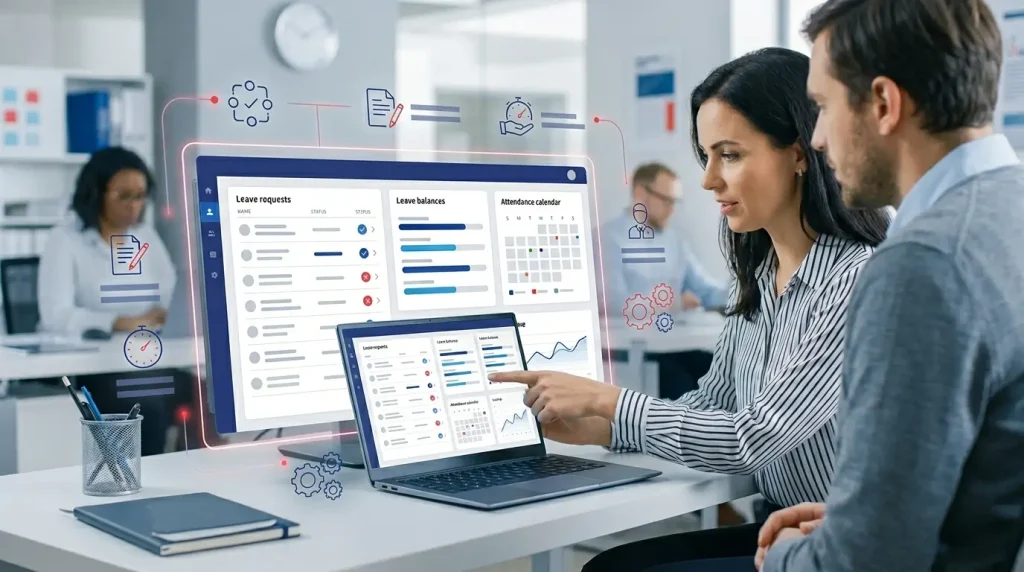
e leaves help SMEs manage employee leave through a structured digital workflow that improves HR administration, payroll accuracy, employee visibility and compliance documentation.
The Simple Meaning of e leaves in HR Management
e leaves refer to electronic leave processes where employees apply for leave online, managers approve requests digitally, and HR teams monitor balances through organized records.
Instead of depending on printed forms, manual spreadsheets or scattered WhatsApp messages, e leaves centralize the whole leave journey.
Employees can submit annual leave, medical leave, emergency leave or unpaid leave through a system, while managers can review requests based on manpower availability.
For SMEs, this is important because many business owners handle HR with limited manpower.
A digital leave process reduces repetitive HR work and helps the company maintain proper records for payroll, attendance and staff planning.
This is also why many growing companies explore outsource hr support when internal HR capacity becomes difficult to manage.
How e leaves Replace Paper Forms, Emails and WhatsApp Requests
A structured e leaves process replaces informal leave tracking with clear records, approval history, leave balance updates and better accountability between employees and employers.
Manual leave requests may look simple at first, but problems appear when records are missing, approvals are unclear or payroll needs confirmation.
If one employee asks through WhatsApp, another through email and another through a paper form, HR has to manually check everything.
With e leaves, the process becomes easier to trace.
Each application has a submission date, approval status, leave type and supporting document if required.
This creates a cleaner HR trail for SMEs.
E leave application: How Digital Leave Requests Improve HR Workflow
An e leave system improves HR workflow by allowing employees, managers and payroll teams to handle leave requests through one organized approval process. It gives SMEs a clearer way to manage applications, approval status and employee leave records in one place.
How an E Leave Application Works for Employees
An E Leave Application allows employees to submit leave requests, check available balance and monitor approval status without repeatedly asking HR for updates.
For employees, the process is usually straightforward.
They select the leave type, choose the date, add remarks and upload supporting documents such as a medical certificate when necessary.
The application is then sent to the right manager or approval level.
This is especially useful for SMEs with hybrid workers, field staff or shift-based teams.
Employees do not need to wait until they are physically in the office to submit their leave request.
Submit Leave Requests Anytime Through a Digital System
A digital leave system supports faster leave submission because employees can apply from a phone, laptop or web-based HR platform.
This helps reduce delays, especially when employees are sick, travelling for work or working outside normal office locations. For HR teams, it also reduces the need to collect and file physical documents.
How Managers Approve Leave Faster
Managers approve leave faster when requests include employee details, leave balance, department schedule and approval status in one structured system.
A proper approval workflow helps managers make better decisions.
They can check whether too many employees are on leave at the same time, whether the employee has enough balance and whether the request affects operations.
Multi-level approval is also useful for SMEs that have supervisors, department heads and business owners involved in decision-making.
This creates better control without slowing down the process.
Fact 1: e leaves Reduce Manual HR Errors
e leaves reduce manual HR errors by automating leave calculations, approval records and employee balance updates that are often mishandled in spreadsheets.
Automated Leave Balance Calculations Improve Accuracy
Automated leave balance calculations help HR teams track annual leave, medical leave and unpaid leave more accurately across employees and departments.
Manual leave tracking can easily lead to wrong balances.
HR may forget to deduct approved leave, calculate entitlement wrongly or miss carried-forward leave.
These mistakes can affect payroll and employee trust.
With e leaves, the system updates leave records based on approved applications.
This helps HR reduce duplicate entries and minimize disputes about remaining leave entitlement.
How e leaves Help HR Track Annual Leave, Medical Leave and Unpaid Leave
e leaves help HR track different leave categories by separating paid leave, unpaid leave, sick leave, emergency leave and other company-approved leave types.
This makes payroll processing clearer because each leave type may affect salary differently.
For example, unpaid leave may reduce salary, while paid annual leave should not.
Fact 2: e leaves Improve Compliance with Leave Policies
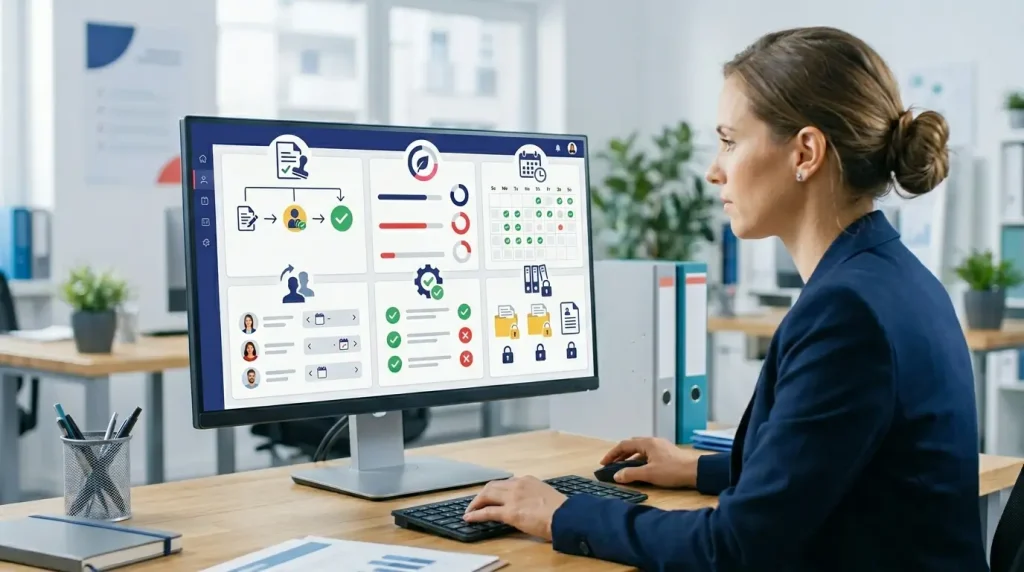
e leaves improve compliance by keeping leave records consistent with company policy, employment documentation and Malaysian HR administration requirements.
Clear Leave Records Support Better HR Documentation
Clear leave records support HR documentation by showing who applied, who approved, when leave was taken and what supporting documents were submitted.
For SMEs, documentation is not just an administrative detail. It supports fair employee management, payroll verification and internal HR decision-making.
When records are complete, business owners can respond better to staff questions or disputes.
This is also helpful when SMEs need to review employment contracts, employee handbooks or internal HR policies.
A proper leave record makes the company more organized and professional.
Aligning Leave Practices with Company Policy and Malaysian Labour Requirements
Leave practices should match company policy, employee entitlement, payroll rules and relevant Malaysian labour expectations for proper HR governance.
SMEs should not treat leave management as an informal process.
A structured system helps ensure leave approvals follow the same rules for all employees, reducing bias and inconsistency.
Fact 3: e leaves Speed Up Leave Application and Approval
e leaves speed up leave application and approval by routing requests automatically to managers, reducing manual follow-ups and improving response time.
Faster Approval Flow Reduces HR Administration Time
A faster approval flow reduces HR administration time because employees and managers can complete leave requests without long email chains or repeated reminders.
When approval is delayed, employees become uncertain and managers may forget pending requests.
HR then has to chase both sides, creating unnecessary workload.
With e leaves, notifications can remind managers about pending approvals.
Employees can also see whether their request is pending, approved or rejected, reducing repetitive questions.
Fact 4: e leaves Give SMEs Better Team Visibility
e leaves give SMEs better team visibility by showing leave schedules, department availability and overlapping absences before they disrupt daily operations.
Leave Calendars Help Managers Plan Workforce Coverage
Leave calendars help managers plan workforce coverage by showing who is absent, when they return and whether another team member is needed.
This is important for SMEs with lean teams.
If two key staff members take leave at the same time, sales, operations, payroll, customer service or project delivery may be affected.
A shared leave calendar gives managers time to plan replacement coverage, adjust deadlines or approve leave based on operational capacity.
Fact 5: e leaves Support Payroll Accuracy
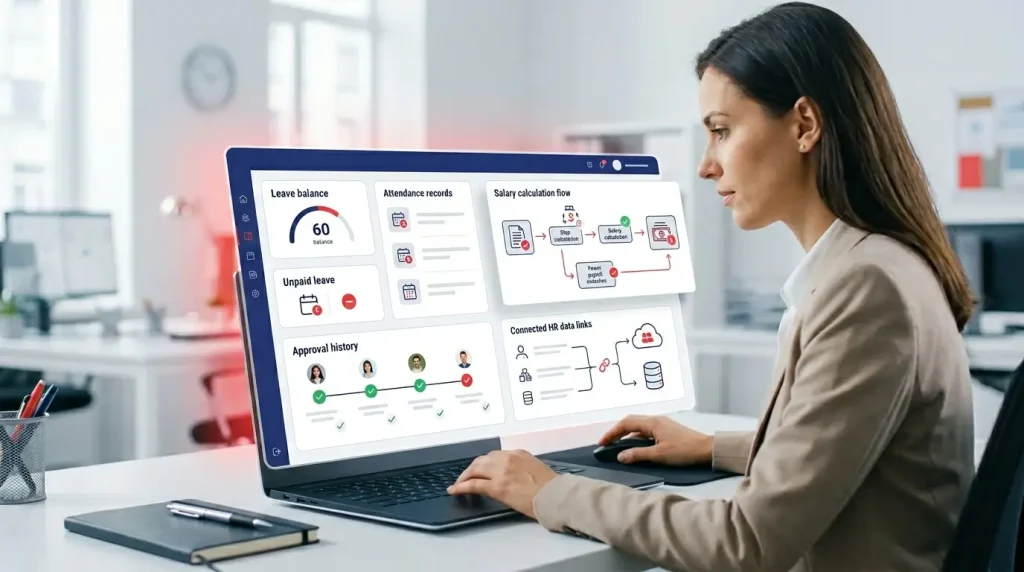
e leaves support payroll accuracy by connecting approved leave records with salary calculation, unpaid leave deduction, attendance data and HR documentation.
Approved Leave Records Help Payroll Teams Calculate Salary Correctly
Approved leave records help payroll teams calculate salary correctly because they confirm paid leave, unpaid leave and attendance adjustments before processing wages.
Payroll is one of the most sensitive HR functions.
Wrong leave deductions can create employee dissatisfaction, while missed unpaid leave can affect company cost.
When leave records are properly approved and organized, payroll teams can process basic salary, allowances, overtime, EPF, SOCSO, EIS, LHDN deductions and other payroll components with better confidence.
Connecting Leave Data with Payroll, Attendance and HR Records
Connecting leave data with payroll and attendance records helps SMEs reduce duplicate entry, manual checking and salary disputes.
This is especially useful when employees have unpaid leave, half-day leave, medical leave or replacement leave that needs to be reflected correctly in payroll.
Fact 6: e leaves Improve Employee Experience
e leaves improve employee experience by giving staff clearer leave visibility, faster approval updates and fairer communication with HR and management.
Employees Can Check Leave Balance Without Asking HR
Employees can check leave balance without asking HR when the system provides self-service access to entitlement, used leave and pending applications.
This reduces frustration for both employees and HR teams. Staff can plan personal matters better, while HR can focus on more important work such as compliance, payroll, recruitment and employee documentation.
Transparency also builds trust. When employees can see their leave status clearly, they are less likely to feel confused about approval decisions or remaining balance.
Fact 7: e leaves Help SMEs Make Better HR Decisions
e leaves help SMEs make better HR decisions by turning leave records into useful workforce data for planning, compliance and productivity management.
Leave Reports Show Absenteeism and Workforce Trends
Leave reports show absenteeism and workforce trends by helping employers identify repeated leave patterns, peak absence periods and department-level manpower risks.
For example, if one department frequently faces overlapping leave, the business owner can review staffing capacity. If absenteeism increases, HR can investigate whether it is related to workload, morale, health issues or poor scheduling.
This turns leave management from a simple admin task into a practical HR planning tool.
Common Leave Management Problems SMEs Face Without e leaves
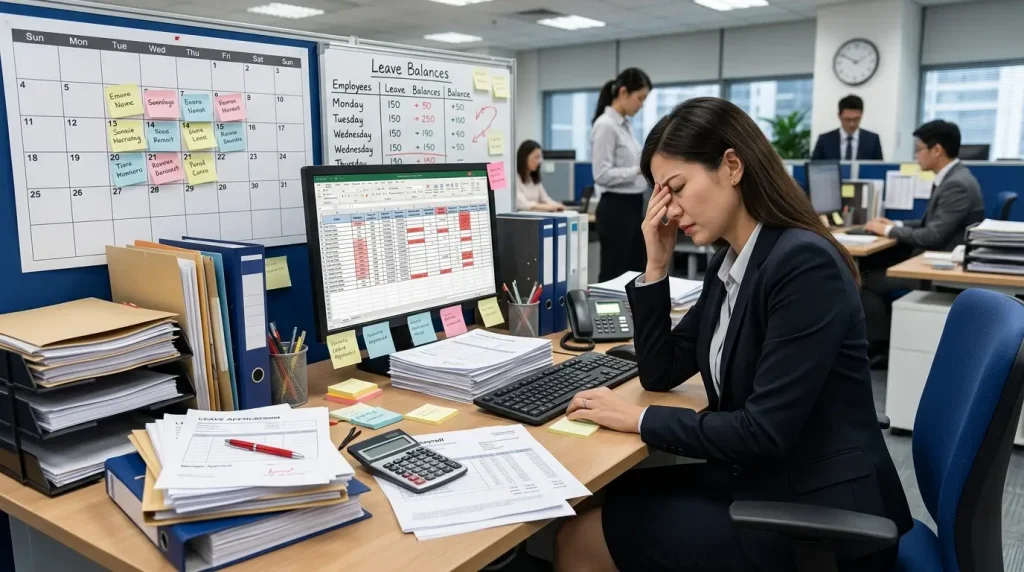
SMEs without e leaves often face lost requests, unclear approvals, payroll mistakes, weak documentation and repeated employee questions about leave balance.
Leave Requests Can Get Lost or Delayed
Leave requests can get lost or delayed when employees submit them through informal channels such as paper forms, chat apps or verbal conversations.
This creates confusion when managers believe leave was not approved, employees assume approval was given, and HR has no clear record. Over time, this affects trust and creates unnecessary disputes.
A proper system prevents this by keeping every leave request traceable from submission to approval.
HR Spends Too Much Time Answering Leave Questions
HR spends too much time answering leave questions when employees cannot check their own entitlement, approval status or historical leave records.
For SMEs with limited HR support, these repeated questions can consume valuable time. Self-service leave access helps reduce admin burden and gives employees more independence.
It also allows HR to focus on higher-value responsibilities such as employee management, payroll accuracy, recruitment coordination and compliance improvement.
Key Features SMEs Should Look for in an e-leave system
SMEs should look for an e-leave system with self-service access, automated approval workflows, customizable policy settings, payroll integration, reporting and secure employee records.
Self-Service Leave Portal
A self-service leave portal allows employees to apply for leave, check balances, upload documents and view approval status without depending fully on HR.
This feature is one of the most practical for SMEs because it reduces repetitive communication. Employees get the information they need, while HR keeps proper records in one place.
Customizable Leave Policy Settings
Customizable leave policy settings help SMEs configure annual leave, medical leave, emergency leave, replacement leave, carry forward and expiry rules.
Every business has different HR needs. A startup may need a simple policy, while a growing SME may need multiple approval levels, different employee groups and clearer entitlement rules.
How e leave hrms Supports Payroll and Attendance Integration
An e leave hrms setup can help SMEs connect approved leave data with salary records, attendance logs and monthly payroll processing.
This reduces duplicate data entry and gives HR teams a more consistent view of employee attendance and leave information.
This is important because leave does not stand alone. It affects paid leave, unpaid leave, overtime planning, allowances and employee attendance records. For more SME-focused HR topics, business owners can also explore MUSTRE’s Human Resources Management articles.
How MUSTRE Can Improve e leave hr Management for SMEs

MUSTRE helps SMEs improve e leave hr management by combining structured leave processes with HR outsourcing, payroll support, compliance advisory, recruitment assistance and corporate training under one HR service approach.
HR Management Services for Structured Leave Policy Setup
MUSTRE supports structured leave policy setup by helping SMEs review employee records, approval flows, HR documentation and practical compliance needs.
For business owners without an internal HR department, this support can reduce uncertainty. MUSTRE can help organize leave policies, employee management practices and HR administration so the business runs more smoothly.
Payroll, Recruitment and Training Support for Growing Companies
MUSTRE supports growing companies with payroll services, recruitment coordination, onboarding assistance, corporate training and wider HR consulting services.
This matters because leave management is connected to many HR functions.
Payroll must reflect accurate leave data, recruitment affects manpower coverage, and training helps managers understand proper HR procedures.
SMEs that want broader support can also learn what to expect from a Human Resources Company before improving their internal HR workflow.
MUSTRE also supports businesses that require commercial officer hiring services, including ESD registration, employment pass processing, dependent pass processing, pass cancellations, special passes and student passes.
Why SMEs Should Start Improving e leaves Now
e leaves help SMEs move from manual leave tracking to a more structured HR process that supports payroll accuracy, employee visibility and better compliance control.
For SMEs, leave management is not just about approving time off.
It affects manpower planning, salary calculation, documentation, employee trust and HR consistency.
By using a clearer digital leave workflow, business owners can reduce confusion, avoid repeated HR mistakes and create a more professional employee management system.
Get Structured HR Support for Better Leave Management
If your business still manages leave through spreadsheets, WhatsApp messages or manual forms, it may be time to review your HR workflow before small issues become payroll or compliance problems.
MUSTRE supports SMEs with HR outsourcing, payroll management, employee administration, recruitment, corporate training and compliance-focused HR guidance.
Learn how MUSTRE’s Human Resources Services can help your company build a more organized HR system without the cost of a full in-house HR department.
Frequently Asked Questions About e leaves
What are the benefits of using an electronic leave system for businesses in Malaysia?
An electronic leave system helps Malaysian businesses manage leave applications, approval records, employee balances and payroll-related leave data more accurately.
For SMEs, it reduces manual admin work, improves visibility, supports HR documentation and helps managers plan manpower more effectively during busy business periods.
How do I choose the best HR software for managing employee leave requests?
Choose HR software that supports online leave application, multi-level approval, real-time leave balance, document upload, payroll integration and reporting.
SMEs should also consider ease of use, Malaysian HR requirements, employee self-service access and whether the system can grow with the company.
What features should I look for in an online leave approval system?
Look for employee self-service, automated approval routing, leave calendar visibility, customizable leave policies, medical certificate upload, payroll sync and clear reporting.
These features help SMEs reduce HR errors, speed up approvals and keep leave records more organized.
What are the legal requirements for employee leave tracking in Malaysia?
Employers in Malaysia should maintain proper employee records, leave documentation and payroll-related information according to employment practices and relevant labour requirements.
SMEs should ensure leave entitlement, medical leave, unpaid leave and approval records are consistently documented for internal control and compliance readiness.
How to integrate an e-leave system with existing payroll software?
Integration usually starts by matching leave types with payroll rules, such as paid leave, unpaid leave, medical leave and half-day leave.
Once approved leave data is synced with payroll, HR teams can reduce duplicate entry and avoid salary calculation disputes.